


UK wood pellet consumption is forecast to reach a record 10.35 million tonnes in 2026, according to a market assessment filed with the US Department of Agriculture’s Foreign Agricultural Service.
The forecast represents an increase of approximately 4% from the 9.95 million tonnes reportedly consumed in 2025. However, the headline figure needs some context: most UK wood pellet consumption is connected to large power stations rather than domestic and commercial biomass heating.

Why Is UK Wood Pellet Consumption Increasing?
The projected increase in UK wood pellet consumption is being driven mainly by the industrial biomass-power sector. Large generating sites are expected to operate at high capacity ahead of planned changes to government subsidy arrangements in 2027.
Industrial electricity generation accounts for an estimated 93% of UK wood pellet demand. Drax and Lynemouth power stations are expected to consume a combined 9.63 million tonnes during 2026.
Pellets used in these power stations belong to a different market from the premium-grade fuel delivered to many farms, schools, care facilities, businesses and domestic biomass boilers.
UK Wood Pellet Consumption and Import Dependence
Rising UK wood pellet consumption also highlights the scale of Britain’s reliance on imported industrial pellets. The USDA assessment forecasts that around 10.15 million tonnes will need to be imported during 2026.
Recently published UK government port statistics support this wider picture. In 2025, British ports handled approximately 9.9 million tonnes of wood pellets. The United States supplied 7.6 million tonnes, representing 77% of UK pellet imports.
Wood pellets were listed as a separate dry-bulk cargo category in the government’s annual port statistics for the first time in 2025. They had previously been grouped with other dry-bulk materials.
What Does the Forecast Mean for Heating Customers?
The residential and commercial heating sector represents only about 7% of forecast UK wood pellet consumption. This means the record national figure should not be interpreted as a direct measure of demand from individual biomass-boiler customers.
Nevertheless, developments in the larger industrial market can affect the wider pellet supply chain. International demand, shipping availability, production capacity and transport costs can all influence supply conditions.
For heating customers, the most important considerations remain fuel quality, reliable delivery and correct storage. Pellets must match the specification required by the boiler and should be protected from moisture throughout transport and storage.
Why Wood Pellet Quality Still Matters
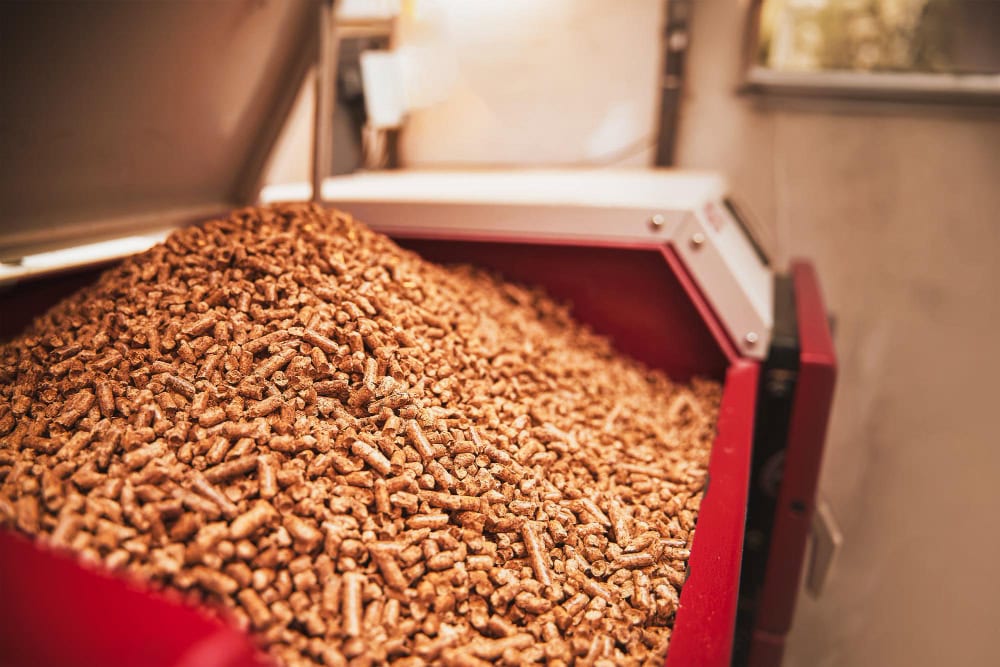
Wood pellets are made by compressing processed wood fibre into a dense, consistent fuel. Their low moisture content allows them to flow through automated systems and produce predictable heat when used in a suitable boiler.
Damaged or damp pellets can break down into excessive dust and fines. This may affect fuel feeds, reduce boiler performance and increase maintenance requirements.
Customers should therefore check that their pellets meet the specification required by their heating equipment. ENplus certification provides assurance covering factors such as moisture content, ash, mechanical durability and the handling of pellets throughout the supply chain.
A Large Market with Two Distinct Uses
The projected rise in UK wood pellet consumption confirms that pellets remain an important part of Britain’s energy mix. It also demonstrates why industrial power generation and biomass heating should not be treated as the same market.
Large power stations account for most of the tonnage, while heating customers need smaller quantities of carefully specified fuel supported by dependable local delivery and technical knowledge.
For businesses operating biomass boilers, planning fuel requirements early can help reduce the risk of disruption during the busiest part of the heating season.
Need to arrange your next pellet delivery? Woodyfuel supplies biomass wood fuel to commercial, domestic and industrial customers from production hubs in the North East, Yorkshire and Lincolnshire.
